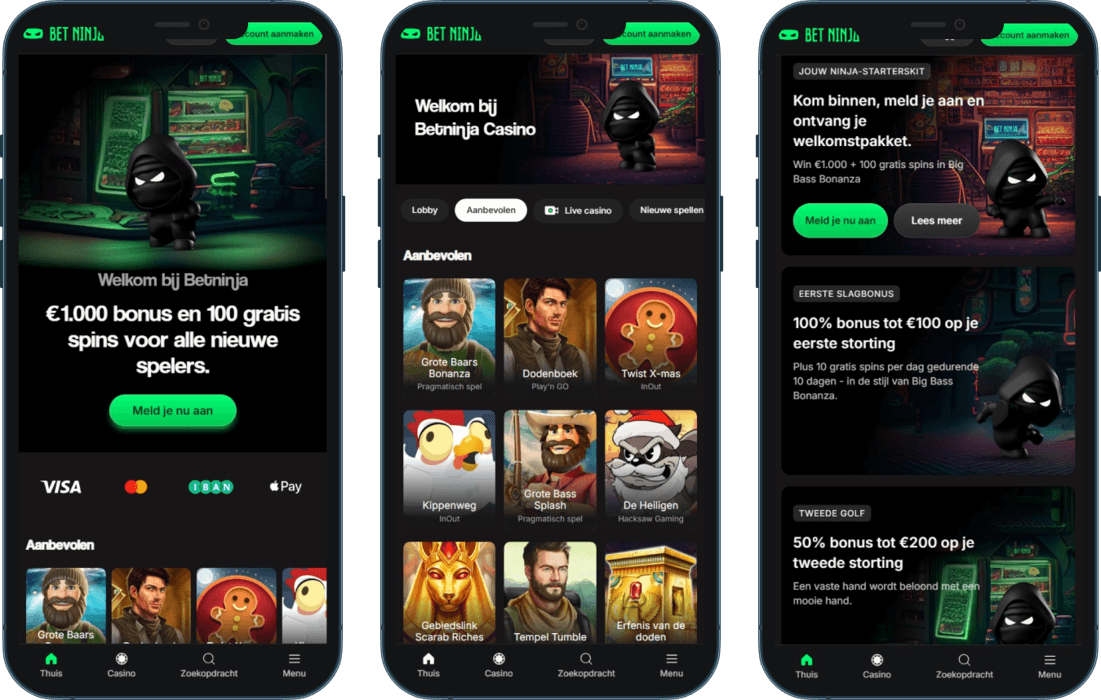

Signing up at an online gaming platform in Canada requires more than selecting a username and password. The verification stage, often known as Know Your Customer or KYC, functions as a required step that separates casual sign-ups from fully active accounts. At Betninja Casino, this process aligns with federal anti-money laundering regulations and provincial gaming standards. Users who know the needed documents, frequent holdups, and security rationale move through the procedure faster and with fewer frustrations. The following sections outline exactly what happens during identity validation, why each step is important, and how to prepare materials before the first deposit attempt. A clear grasp of these fundamentals safeguards both the operator and the account owner.
Typical Reasons for Identity Check Delays and Rejections
Unclear photographs are the most common cause of document refusal across all age categories. Even small hand movement during capture softens the fine print on driver’s licenses enough to confuse optical recognition systems. Name mismatches between the registration form and the identity document, including middle name omissions or hyphenation discrepancies, trigger the account for manual inspection. Address discrepancies occur when players have relocated and have not updated either their government ID or their utility statements. Canadian seasonal residents who split time between provinces sometimes submit documents bearing an address that varies from the one listed during enrollment, which creates a compliance problem. Payment method verification difficulties surface when e-wallet accounts such as MuchBetter or Interac-linked profiles are registered under a different name than the casino membership. Solving these problems commonly requires a direct email to the support team with corrected documents.
Ways to Handle a Failed Submission Gracefully
Obtaining a rejection notice leads to understandable disappointment, yet an objective approach spares time and reduces subsequent mistakes. The notification email indicates the exact document category that was rejected and often includes a brief reason note. A player should open the original image file on a desktop computer to inspect clarity at full resolution before recapturing. Adjusting ambient lighting by moving to a room with indirect natural illumination eliminates harsh shadows without creating reflective hot spots on laminated ID areas. When the issue involves an address discrepancy, uploading a secondary supporting document such as a bank-issued mortgage statement or a provincial vehicle registration certificate can fill the credibility deficit. Support agents at Betninja Casino react with precise checklists tailored to the rejection cause, making follow-up submissions significantly smoother than the initial attempt.
Managing Re-Verification Triggers and Constant Compliance
Account verification is not limited to the initial sign-up period. Major account changes, such as updating the linked email address, changing the default currency, or connecting a new withdrawal method, often re-engage the compliance workflow. Canadian players who update their residential address after moving provinces may be required to resubmit a fresh proof of address document indicating the new location. Large cumulative withdrawal amounts crossing predefined risk thresholds can initiate an enhanced due diligence review, particularly when the transaction patterns deviate from the player’s established behavior. Betninja Casino informs affected users through the account message center well before imposing any restrictions, giving time to collect and submit the requested materials. Proactively updating documentation when life circumstances change ensures the account in continuous good standing and avoids surprise verification holds during time-sensitive withdrawal requests.
Common Questions
How much time does a standard verification review usually require?
Automated checks typically finish in five to fifteen minutes if the documents provided are clear and completely readable. Manual checks triggered by mismatched data or borderline image quality can extend the process to between twenty-four and forty-eight hours. Busy periods near major sporting events or holiday weekends occasionally introduce a minor processing delay. Players in Canada can track the status right from their account dashboard, without requiring support contact for standard updates.
Is a health card acceptable as my main photo ID?
Provincial health cards present compliance complications because certain provinces legally restrict their collection and storage by non-healthcare entities. Ontario, as an example, advises organizations against requesting or recording health card numbers. A driver’s license, provincial photo ID card, or Canadian passport provides a widely accepted alternative that sidesteps regulatory uncertainty. Betninja Casino advises choosing a document that is clearly allowed under federal privacy guidelines to guarantee a seamless verification process.
What happens if my address differs from the one on my bank statement?
A difference between the casino’s registered address and the banking address triggers an automatic verification failure. Players who have distinct mailing and residential addresses should guarantee the gaming account employs the residential address that is listed on authorized financial documents. Modifying the address straight within the banking portal before generating a new statement resolves the discrepancy neatly. Submitting a additional utility bill with the right residential address can also clarify the situation during a manual review.
Do you always need a selfie during the verification process?
A real-time selfie is not universally mandatory but may be requested when the automated system cannot confidently match the uploaded photo ID to the account holder. This biometric liveness check includes taking an image through the device camera while following on-screen positioning prompts. The selfie session typically continues for under one minute and aids stopping identity theft using stolen document images. Refusing the selfie request halts the verification until alternative proof can be submitted.
Can you finish verification using a mobile device exclusively?
Smartphone document scanning works dependably when phones feature a sharp rear camera and a steady internet connection. The key challenge involves photographing the entire document within the frame without cutting off corners, as mobile uploads sometimes trim aggressively. Natural lighting near a window produces improved results than artificial indoor bulbs when photographing glossy IDs. Both Android and iOS devices are compatible with the upload portal without demanding a separate application installation for the typical document submission workflow.
How exactly is my identity document kept and protected?
Uploaded files travel via encrypted TLS connections and are stored in isolated cloud storage environments regulated by Canadian data residency requirements. Access to raw document images is limited to authorized compliance personnel whose every interaction is tracked and audited. Encryption keys rotate periodically to minimize exposure risk, and retention policies follow provincial regulations that set maximum storage durations after account closure. The processing architecture isolates identity data from behavioral gaming analytics, ensuring a strong privacy boundary between verification and marketing systems.
What steps should I take if I believe fraudulent document requests?
Deceptive requests often come through unofficial channels like social media messages or email addresses that imitate the brand but contain subtle spelling variations. A legitimate platform never demands full credit card front scans or account passwords during verification. Canadian players should report suspicious communications to the official support team for investigation and avoid clicking any embedded links. Enabling multi-factor authentication adds an extra barrier that makes credential theft less damaging even if a phishing attempt captures the primary login password.
The verification journey at a regulated Canadian gaming site transforms what initially appears as a procedural inconvenience into a structured security framework. Players who organize legible documents, synchronize their registration details with official records, and respond promptly to clarification requests complete the process with minimal disruption. The resulting verified status delivers faster withdrawals, broader account functionality, and strengthened protections that benefit both the individual and the wider gaming community operating under Canadian oversight standards.
Why Verification Exists in the Canadian Gambling Space
Oversight bodies in Ontario, British Columbia, and additional provinces enforce rigorous player identification requirements on regulated operators. The Proceeds of Crime (Money Laundering) and Terrorist Financing Act defines the federal baseline, while provincial lottery and gaming commissions apply layers specific to interactive digital wagering. These frameworks compel sites like Betninja Casino to collect proof of identity, age, and residency before approving withdrawals. The goal is certainly not to disrupt legitimate users but to prevent underage participation, deter fraudulent transactions, and guarantee that funds do not originate from illicit sources. When a player provides a government-issued photo ID, the system verifies personal details against third-party databases. This automated screening takes place within minutes and hardly ever interrupts the gaming session itself. Grasping this background transforms a seemingly bureaucratic hurdle into a shared industry safeguard.
Verification Benefits and User Independence
Passing the verification checkpoint enables the full set of account features that stay locked for unconfirmed users. Payout settlement durations fall from manual review lines to standard processing timeframes, often finishing within 24 to 72 hours based on the payment method selected. Funding maximums typically increase, and access to premium promotional bonuses, tournament entries, and loyalty tier enhancers opens immediately. Players who pass verification soon in their customer experience escape the disruptive halt of a withdrawal hold after a big win, a scenario that causes the bulk of complaint cases across the Canadian market. The verified icon on the account interface demonstrates trust to the site’s compliance department and communicates that future activities will experience minimal resistance. Maintaining current contact information post-verification ensures that any periodic re-verification requests get to the correct address without activating unnecessary security freezes.
Primary Documents Needed for Identity Verification
The standard document package contains three groups: photo ID, proof of address, and periodically payment method confirmation. A valid provincial driver’s license, Canadian passport, or government-issued photo card meets the photo ID requirement. The document must be current, with readily apparent edges, and all four edges shown in the uploaded picture. Expired identification cards encounter automatic refusal regardless of how newly they lapsed. Proof of residence typically comes from a utility bill, bank statement, or official government letter issued within the preceding three months. Electronic statements are acceptable as long as they display the full URL or sender information in the screenshot. Players paying via credit card may have to submit a edited image indicating only the last four characters, the label, and the expiry date.
Verification of Address Specifics for Canadian Residents
Utility suppliers such as Hydro One, BC Hydro, or Enbridge issue statements that function as ideal residency proof. The document must display the service address corresponding with the registered account details and a date indication within the valid window. Mobile phone bills are usually accepted, but prepaid plan invoices may be declined due to restricted personal data areas. Canadian members using digital banking can obtain PDF files of monthly statements directly from their financial institution’s platform, making sure the file features the institution’s emblem and the account holder’s identity beside the residential place. Screenshots of online banking dashboards often get refused because they miss the formal heading or formatted format that verification teams anticipate. Producing and copying a physical copy usually solves clarity concerns if mobile submissions appear blurry or cut.
Establishing a Safe Gaming Account Through Confirmation
The verification process also supports Canada’s growing emphasis on responsible gaming infrastructure. Authenticated accounts allow personalized deposit limit features, self-exclusion periods, and reality check reminders set to the established time zone. When a player requests a cooling-off phase, the platform can implement the restriction across associated accounts recognized through confirmed personal data elements, blocking easy circumvention via secondary registrations. Financial vulnerability flags become effective when integrated with a established identity, allowing the operator’s player protection team to step in with tailored support resources before concerning patterns intensify. This merging of compliance and player welfare generates a double benefit from a unified verification step. The data never leaves the regulated Canadian ecosystem, remaining within servers bound by provincial oversight and traceable privacy systems that value user protection over commercial convenience.
Setting up a Betninja Casino Account properly
Precision during the initial registration phase eliminates nearly half of all verification rejections. The sign-up form requires the exact legal name displayed on the identification document that will later be submitted. Shortened names, shortened versions, or anglicized adaptations create mismatches that trigger manual reviews. Canadian players should enter a permanent residential address that matches bank statements or utility records, not a temporary mailing address or workplace location. The phone number field accepts standard ten-digit North American numbers and should be active for potential SMS confirmation codes. Choosing a strong password with a mix of upper and lowercase letters, numbers, and symbols adds a foundational layer of account protection. After submitting the form, the platform transmits an email containing a confirmation link that must be clicked within a specified timeframe to activate the profile.
Enabling Multi-Factor Authentication
Security-focused players often activate an additional verification method immediately after account creation. Multi-factor authentication, or MFA, ties the login process to a physical device through authenticator applications or time-sensitive SMS codes. This step is optional at Betninja Casino, but it drastically minimizes the chance of unauthorized access even if the primary password becomes compromised. A lost phone scenario can be handled through backup recovery codes issued during setup, which should be stored offline in a secure location. MFA does not take the place of the identity verification for withdrawals; it functions as a login-specific shield. Canadian users who travel frequently appreciate the adaptive risk engine that may prompt for a second factor when logging in from an unfamiliar IP address or geographic region.
Protecting Personal Data During the Verification Cycle
Licensed Canadian-facing platforms work under data protection duties that control how identity documents are kept, transmitted, and eventually purged. Encryption protocols shield uploads during transit, and at-rest files are stored in segregated storage vaults with strict access logging. Betninja Casino uses a privacy-by-design architecture where verification data passes through isolated processing nodes before the raw document images are transferred to long-term encrypted archives. Players should steer clear of sending sensitive documents through unencrypted email channels or messaging apps, as these methods lack the contractual security guarantees built into the platform’s upload portal. Any request for documents via social media direct message is a fraudulent attempt and should be reported immediately. Legitimate verification communications always originate from the domain registered to the official casino website and never ask for full credit card front scans or banking passwords.
Complete Document Upload Process
The upload interface at Betninja Casino walks users through each document category with designated fields and accepted format indicators. After logging in and heading to the verification section, a player selects the document type from a dropdown menu before attaching the file. JPEG and PNG formats deliver the most reliable results, while PDF uploads function for multi-page statements but may trigger a size warning when exceeding ten megabytes. The platform automatically declines files with obvious editing artifacts, watermarks that obscure information, or reflective glare across critical data fields. Once uploaded, an automated optical character recognition engine retrieves the name, date of birth, and document number for comparison against the registration details. The system may request a real-time selfie if the photo ID image quality falls below the confidence threshold, a practice increasingly common among Canadian-facing operators.
- Sign in and open the account verification center from the dashboard menu.
- Select the document category: photo ID, address proof, or payment confirmation.
- Snap a well-lit image showing the entire document with no cropping of edges.
- Attach the file using the designated upload button and confirm the submission.
- Watch for the automated review; check email or SMS for any additional information requests.
- Reply to clarification queries within the requested timeframe to avoid an escalated hold.